|
GOD IS . . . . A New Definition?
We find tremendous diversity in the major belief systems and their views of God. It is easy to see why Styers describes selecting ones own god as a marketplace experience. · Hindus believe in multiple gods. · Buddhists say there is no deity. · New Age followers believe they are God. · Muslims believe in a powerful but unknowable god. · Christians believe in a God who is loving and approachable. The Apostle Paul tells us, “See to it that no one takes you captive through hollow and deceptive philosophy, which depends on human tradition and the basic principles of this world rather than on Christ.” - Colossians 2:8 NIV On her show recently, Oprah Winfrey featured several outspoken New Age leaders. When a Christian woman in the audience asked Oprah, “What about Jesus?” Oprah insisted that Jesus “can't possibly be the only way” to God. She repeated that statement over and over again. And when the Christian woman quoted Scripture concerning the return of Jesus, Oprah suddenly said, “I can’t get into a religious argument with you (repeated, over and over again). Isn’t it strange that when so-called intellectuals are confronted with the truth of Scripture, they want out of the discussion? As people try to create God to be whoever they want him to be, or whoever they are most comfortable with, we must ask the question, “Is the church guilty of doing the same thing?” May we take our eyes off ourselves and put them back on the greatness of our God. David, in his song recorded in the Word as Psalm 18:30-36, describes God in very different ways than we find people often trying to describe “their” god today. They are trying to mix and match the attributes they want for their individual god. In the same way we might go to a buffet and select many different kinds of food to eat, some today will pick and choose and create the god, or gods, that fit their lifestyle rather than accepting the God Almighty and living according to the lifestyle He has designed for His people. Look at the various descriptions of God listed in this psalm of David. David sang these words to God after he had been delivered from the hand of his enemies and out of the hand of Saul. He had experienced the power of the One God Almighty. David says in verses 30 and 32 that God is Perfect. We can tie these two verses together to begin to understand what God is Perfect means. Verse 30 states very simply and clearly that God’s way is perfect. Verse 32 says God arms me with strength and makes my way perfect. This word “perfect,” as David uses it here, means complete, whole, unimpaired; entirely in accord with truth, or fact. The same word describes God’s perfection, as well as man’s perfection. Jesus speaks of the perfect state of His Father in Matthew 5:48, saying: “Be perfect, therefore, as your heavenly Father is perfect.” This statement is in the context of his teaching on loving our enemies. Can we be perfect, as God is perfect? Here, Jesus uses the word in the sense of something being finished; wanting nothing necessary to completeness. We will find other references regarding perfection in 1 Peter 5:10; James 1:4; Colossians 4:12 (stand perfect, mature, fully assured in all the will of God). David tells us, in verse 31, that God has no rivals. He has no competition. “Who is God besides the Lord; who is the Rock except our God?” The folks described in the Wall Street Journal article mentioned earlier will find this out after testing their other gods, finding, possibly too late, that they do not satisfy. There is no one else who is as consistent as the Lord God. And what is the reason for that fact? The reason is that no other god can even begin to meet the needs of the heart of mankind. And why not? Because the one true God is the creator of the heart of mankind, and He alone knows the needs of His creation’s heart and life. God is the Rock – solid, steady, unchanging, consistent in all His ways. He is perfect because of these qualities. We are to be like Him in those ways – solid, steady, unchanging in our understanding of His Word, consistent in the way we live – in all our ways – according to the teachings of Jesus Christ – not allowing ourselves to be swayed by the latest trendy religion or new found god of the day. Intimacy with our Lord makes us love Him. The New Testament teaches that God’s purpose is to conform us to the image of Christ (Philippians 2:5 – “Your attitude should be the same as that of Christ.”- NIV) God didn’t pick David up in a helicopter and take him to the heights. David climbed as a deer might – with sure and steady feet planted in just the right places as he describes in verse 33. David realized the state of perfection he speaks of through the rigorous training of life. And David often had some problematic experiences getting it right. He was known by God as “a man after God’s own heart,” but when we read the adventures of his life, we have to wonder how and why God would view him with that kind of intimacy. It is because of the training God put him through, and his desire to be all that God intended him to be. He was consistent; he desired the same attitude as God; he understood that there is no other God besides the Lord God Almighty. This phrase in verse 33, “he enables me to stand on the heights,” is a powerful concept. To be enabled by God is to go where we would never imagine we could go – as David says, “to the heights.” Our preparation, enabling and equipping for service requires training for battle. God attempts to train us to such a degree that we gain enough strength to “bend a bow of bronze.” David would have known about this kind and quality of weapon of battle. Tools, weapons, and armor made from bronze were superior in their effectiveness and durability to those made earlier from stone or copper. Bronze was also stronger than iron. To bend the bronze bow took a tremendous amount of training and strength. God provides that training to equip us to gain strength that enables us to become His obedient and faithful followers. God is the source of our strength.The key statement, standing above all else David says here in this psalm comes in verse 35. David recognizes God’s gift of victory and that God’s hand has sustained and supported him through his entire climb through the treacherous territory of life. Then, he speaks a powerful message saying to God, “You stoop down to make me great.” Can you see the picture here? God makes us great. “Great” translated from the Hebrew means to be or to become great, to be or to become many, to be or to become much, to be or to become numerous. He makes us determined to not hide in humiliation or fear; to demonstrate no fear of defeat. We start fighting back with the tools provided through God’s training. His stooping down to us causes us to give up our selfishness, our negativity about our woeful condition. He will not allow us to say, “There is no hope.” God gets into the pit with us to lift us out. He stoops down to make us great. Too many people will settle for just “being good enough,” instead of accepting the greatness God has in store for us. David understood, as we should, the magnitude of the honor it is to serve a living God who is so intimately involved in our lives. How sad it is when His people fail to understand and will not seek or desire that close relationship with Him. Many would rather take the easy way instead of taking God’s way. We have only those two choices – God’s out of this world way, or the easy way of this world. The easy way often makes absolutely logical sense to us. It requires no faith – just do it. But the way of God requires a step of faith into the darkness with no equipment of our own to support, guide, or direct us. And that is what He wants for us. Because when we have nothing on our own, nothing and often no one to rely upon, we will depend upon God for our strength, for guidance on the way to perfection. We will depend upon Him for the strength to bend the bow of bronze. We will experience Him stooping down to scoop us up out of harm’s way and into His protection from the evil of the world. A god conjured up in the mind of man, or a god created by man’s desire to dictate to him his wants and wishes; a god who is tailored to satisfy individual needs will never be the Lord God who can truly satisfy his needs. Only God Almighty can satisfy the needs of the heart of man because He created the heart and He knows the heart. Buffet-style Christianity and god selection may provide the things that taste good, but the soul is woefully missing out on the "meat." Jesus said, "Man does not live on bread alone, but on every word that comes from the mouth of God." - Matthew 4:4 NIV See to it that no one takes you captive through hollow and deceptive philosophy, which depends on human tradition and the basic principles of this world rather than on Christ. - Colossians 2:8 NIV. Dr. Fair is Vice President of Master’s International School of Divinity 
WHY HOLINESS IS SO
IMPORTANT
Why then is holiness so important? Why does the Apostle say, “Without [it] no man shall see the Lord” (Heb. 12:14)? Let me set out in order a few reasons: I. We must be holy because God plainly commands it. The Lord Jesus says, “Except your righteousness shall exceed the righteousness of the scribes and Pharisees, ye shall in no case enter into the kingdom of heaven” (Matt. 5:20). Paul tells the Thessalonians, “This is the will of God, even your sanctification” (1 Thess. 4:3). And Peter says, “As He which hath called you is holy, so be ye holy in all manner of conversation…” (1 Pet. 1:15). II. We must be holy because this is one grand purpose for which Christ came into the world. Paul writes to the Ephesians: “Christ loved the church, and gave Himself for it, that He might sanctify and cleanse it” (Eph. 5:25,26). And to Titus: “He gave Himself for us, that He might redeem us from all iniquity, and purify unto Himself a peculiar people, zealous of good works” (Titus 2:14). Are believers said to be elect? It is “through sanctification of the Spirit.” Are they predestinated? It is “to be conformed to the image of God’s Son.” Are they chosen? It is “that they may be holy.” Are they called? It is “with a holy calling.” Are they afflicted? It is that they may be “partakers of holiness.” III. We must be holy because this is the only sound evidence that we have a saving faith in our Lord Jesus Christ. James warns us there is such a thing as a dead faith (James 2:17). True faith will always show itself by its fruits It will sanctify, it will work by love, it will overcome the world, it will purify the heart. I suspect that, with rare exceptions, men die just as they have lived. The only safe evidence that we are one with Christ, and Christ in us, is holy life. If we would die the death of the righteous, let us seek to live His life. IV. We must be holy because this is the only proof that we sincerely love the Lord Jesus Christ. This is a point on which He has spoken most plainly: “He that hath my commandments and keepeth them, he it is that loveth Me” (John 14:21, cf. also 15:14). It was sin that wove the crown of thorns. It was sin that pierced our Lord’s hands, and feet, and side. It was sin that brought Him to Gethsemane and Calvary, to the cross and to the grave. Cold must our hearts be if we do not hate sin and labor to get rid of it. V. We must be holy, because this is the only sound evidence that we are true children of God. Children in this world are generally like their parents. It is seldom indeed that you cannot trace a kind of family likeness. And it is much the same with the children of God. The Lord Jesus says, “If ye were Abraham’s children ye would do the works of Abraham” (John 8:39); “If God were your Father ye would love Me” (v. 42). If men have no likeness to the Father in heaven, it is vain to talk of their being His “sons.” “As many as are led by the Spirit of God, they,” and they only, “are the sons of God” (Rom. 8:14). “Say not,” says Gurnall, “that you have royal blood in your veins, and are born of God, unless you can prove your pedigree by daring to be holy.” VI. We must be holy, because this is the most likely way to do good to others. Our lives will always be doing either good or harm to those who see them. You may talk to persons about the doctrines of the Gospels, and few will listen, and still fewer understand. But your life is an argument that none can escape. They may not understand justification, but they can understand love. I believe there is far more harm done by unholy and inconsistent Christians than we are aware of. They supply the children of this world with a never-ending excuse for remaining as they are. Let us take heed lest the blood of souls should be required at our hands. From murder of souls by inconsistency and loose walking, good Lord, deliver us! Oh, for the sake of others, if for no other reason, let us strive to be holy! VII. We must be holy because our present happiness depends much upon it. We are sadly apt to forget that there is a close connection between sin and sorrow, holiness and happiness, sanctification and consolation. God has so wisely ordered it, that our well-being and our well-doing are linked together. Oh, for our own sakes, if there were no other reason, let us strive to be holy! He that follows Jesus most fully will always follow Him most comfortably. VII. Lastly, we must be holy because without holiness on earth we shall never be prepared to enjoy heaven. Heaven is a holy place. The Lord of heaven is a holy Being. The angels are holy creatures. Holiness is written on everything in heaven. The Book of Revelation says expressly, “There shall in no wise enter into it anything that defileth, neither whatsoever worketh abomination, or maketh a lie” (Rev. 21:27). People may say, in a vague way, “they hope to go to heaven;” but they do not consider what they say. There must be a certain “meetness for the inheritance of the saints in light.” To reach the holiday of glory, we must pass through the training school of grace. We must be heavenly-minded, and have heavenly tastes in the life that now is, or else we shall never find ourselves in heaven, in the life to come. How shall we ever be at home and happy in heaven, if we die unholy? Death works no change. The grave makes no alteration. Each will rise again with the same character in which he breathed his last. Where will our place be if we are strangers to holiness now? A Few Words of Application: 1) Do you know anything of the holiness of which I have been speaking? I do not ask whether you attend you church regularly, whether you have been baptized, and received the Lord’s Supper, or whether you have the name of Christian. I ask: Are you holy, or are you not? I do not ask whether you mean some day to be holy. I ask: Are you holy this very day? Why do I press the question so strongly? Because the Scripture says, “Without holiness no man shall see the Lord” (Heb. 12:14). It is the word of God, not of man. Alas, I look at professing Christians, and see the vast majority having nothing of Christianity but the name. I turn to the Bible, and I hear the Spirit saying, “Without holiness no man shall see the Lord.” You may say, “It was never meant that all Christians should be holy, and that holiness, such as I have described, is only for great saints, and people of uncommon gifts.” I answer, “I cannot see that in Scripture. I read that “every man who hath hope in Christ purifieth himself” (1 John 3:3). ”Without holiness no man shall see the Lord.” You may say, “At this rate, very few will be saved.” I answer, “I know it. It is precisely what we are told in the Sermon on the Mount.” The Lord Jesus said so 1,900 years ago: “Strait is the gate, and narrow is the way, that leadeth unto life, and few there be that find it” (Matt. 7:14). Few will be saved, because few will take the trouble to seek salvation. Men will not deny themselves the pleasures of sin and their own way for a little season. “Ye will not come unto Me,” says Jesus, “that ye might have life” (John 5:40). “Let not men deceive themselves,” says Owen: “[The Lord Christ] leads none to heaven but whom He sanctifies on the earth. This living Head will not admit of dead members.” I doubt not that many believers know these things, but I think it good for us to be put in remembrance of them. I must frankly say I wish there was not such an excessive sensitiveness on the subject of holiness as I sometimes perceive in the minds of believers. A man might really think it was a dangerous subject to handle, so cautiously is it touched! Yet surely when we have exalted Christ as “the way, the truth, and the life,” we cannot err in speaking strongly about what should be the character of His people. I do not set up myself to be better than other people, and if anyone asks, “What are you, that you write in this way?” I answer, “I am a very poor creature indeed.” But I cannot read the Bible without desiring to see many believers more spiritual, more holy, more single-eyed, more heavenly-minded, more whole-hearted than they are today. I want to see a more decided separation from the world, a closer walk with God. We are all more than half asleep. The night is far spent, and the day is at hand. Let us awake. Let us open our eyes more widely. “Let us lay aside every weight, and the sin which doth so easily beset us” (Heb. 12:1). “Let us cleanse ourselves from all filthiness of flesh and spirit, and perfect holiness in the fear of God” (2 Cor. 7:1). Would You Be Holy? Would you become a new creature? Then you must begin with Christ. You will make no progress till you feel your sin and weakness, and flee to Him. “Without Christ we can do nothing” (John 15:5). There is not a brick nor a stone laid in the work of our sanctification till we go to Christ. Holiness is His special gift to His believing people. Holiness is the work He carries on in their hearts, by the Spirit whom He puts within them. Holiness comes not of blood. Parents cannot give it to their children. Ministers cannot give it to you by baptism.. It is the result of vital union with Christ. It is the fruit of being a living branch of the True Vine. Go, then, to Christ and say, “Lord, not only save me from the guilt of sin, but send the Spirit, whom You promised. Make me holy. Teach me to do Thy will.” Would you continue holy? Then abide in Christ. He says Himself, “Abide in Me and I in you, he that abideth in Me and I in him, the same beareth much fruit” (John 15:4, 5). It pleased the Father that in Him should all fullness dwell—a full supply for all a believer’s wants. He is the Physician to whom you must daily go, if you would keep well. He is the Manna which you must daily eat, and the Rock of which you must daily drink. Paul was indeed a holy man of God—and what was the secret of it all? He was ever “looking unto Jesus” (Heb. 12:2). “I live, yet not I, but Christ liveth in me. The life that I now live, I live by the faith of the Son of God” (Gal. 2:20). Let us go and do likewise. Bishop Ryle’s sermon is included in the Bath Road Baptist Church series of Spurgeon Sermons from the Metropolitan Tabernacle Pulpit. Provided to ICLnet and the internet community by the Bath Road Baptist Church, Kingston, Ontario, Canada. About the Author: John Charles Ryle was born in 1816 in Macclesfield, England. The son of a wealthy banker, he was spiritually awakened in 1838 on hearing Ephesians 2 read in church. He was appointed bishop of Liverpool at Disraeli’s recommendation in 1880. C. H. Spurgeon called him “the best man in the Church of England.” He upheld the Reformation doctrine of grace, and he recommended the English Reformers, Puritans, and eighteenth-century evangelicals as models for both doctrine and devotion. More than 12 million of his tracts were sold in over a dozen languages during his lifetime. Their influence on popular Christianity, like that of Spurgeon’s sermons, was incalculable. He died in 1900. Copyright ©2004 Pulpit Helps • 6815 Shallowford Rd. Chattanooga, TN 37421
It seems like pastors and Bible teachers are increasingly reluctant to be saints. I don't mean the dead kind like St. Paul, St. Augustine or St. Mother Theresa. They are easy to venerate. Being dead, they cannot disappoint us by further failings. Besides, not many Christian leaders I know want to be dead right this moment. I am referring to what the New Testament refers to as "saints" in the here and now. I am puzzled by the current popularity of saying such things as "Well, I am just like everyone else. I sin every day in thought word and deed." or "I'll be honest with you. I struggle with sin just like the rest of you." Is it an attempt to be "like everyone else," to not "brag about doing anything good" or is it an attempt to be relevant? One can wonder if it is in any way connected with another popular trend...that of being super causal in the pulpit. You know, knit shirt - no tee-shirt, docker pants, casual shoes - no socks. How about shaved heads and unshaved faces, drinking bottled water, telling jokes, playing short DVD clips, and mostly going Bible lite...let's not forget that. Being a living saint seems somehow out of sync with the casual "I feel your pain" pastor of today (who prefers a contraction of his first name over being referred to as a "pastor"). Not at all like the bare knuckled preachers who used to stand behind a pulpit, read hard passages of Scripture, then preach them without so much as a grain of sugar while only on rare occasions taking a reluctant sip from a glass of water to sooth vocal chords strained by an exercise of passion...even pathos. The sinning saint no matter how casual seems a kind of enigma. One is puzzled by such Biblical statements as "the soul that sinneth, it shall die," he who does what is sinful is of the devil," or what about "I write this to you that you sin not." I didn't bother to include the Biblical references because those who have already gotten bent out of shape about the direction of this little tome won't want to read them anyway. So, did St. Paul, St Augustine and St. Mother Theresa sin while they were living saints? Yep! But the question is ill put. The real question is to what extent, degree, in what context, and why? Sure, all living saints are subject to weakness (Hebrews chapter 10 has a lot to say about that, and sinning too). But that's not what troubles me. What troubles me is this idea that once a person is born-again they join a fraternity of fellow sinners...regular sinning saints if you please. We seem to be afraid of the word "holiness." It's almost an insult to suggest it. It's crazy! We tell people that sin will send them to hell - that they need to be saved from it, then just as soon as they are, we tell them that if they are normal they will keep on doing it every day for the rest of their lives. If someone suggests an alternative, we deride them as hypocrites, puffed up, and self-deceivers. Why is it that we are so comfortable with sinning saints? I know one thing. As a living New Testament saint myself, I don't like sin, I don't want to sin, I hate sin, and I trust every day in the empowering of the Holy Spirit to keep me from "willful sins." When I fail at the ideal, it is never the fault of the Holy Spirit. And when I fail, forgiveness is but a confession and repentance away. That's the Biblical norm for living saints! Why can't we promote it more seriously? Is it because sin is not casual. Sin is not "one of the guys." Sin is not cool. Living a life in hateful defiance of sin is serious business and hard work. Biblically speaking, "sinning like the saints" is living a life of determined and vociferous defiance to the very idea of sin, and consequently a ready and tender heart that easily seeks the forgiveness of God when it arises. Perhaps it's time to promote a different attitude toward sin. One less casual, one more Biblical, and one that every saint can live with in the present life. An old revival song is playing in my heart just now. "Search me Oh God, and know my heart today. Try me Oh Saviour, and know my thoughts I pray. See if there be some wicked way in me, Cleanse me from every sin and set me free." Free from what? From what I want to know!
|
CHRISTMAS FROM PAUL'S PERSPECTIVE
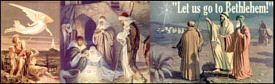
Paul begins with a challenge for all believers, past and present, that we are to “have this attitude in yourselves which was also in Christ Jesus.” In other words, he calls us to have this same attitude, the heart of a servant. Paul then proceeds to describe how Christ manifested that heart with divine purpose, of how Jesus emptied Himself, descended from the Father, leaving the riches of His deity, that which He possesses eternally, to the humility of being born a servant to all men. What transpired on that first Christmas day? What was going on behind the scenes of the manger? What steps did Christ take in order to descend to this lowly state? I. The first step was surrendering Where do we see this willingness? Philippians 2:6. “Who, although He existed in the form of God, did not regard equality with God a thing to be grasped?” Look closely at the word “form.” It is the Greek word “MORPHE,” which describes the essential character of something. According to Paul, this “morphe” was essential to the character of Jesus, His “morphe” surrendered. His “form” or “MORPHE” was that of “of God” or “deity.” And because His essential character was that “of God” or “deity” He had certain rights. And one of those rights was “the right of equality.” Look at vs.6, but this time read the entire verse. What is Paul revealing to us about Christmas, this incarnation event? Look at vs. 8: “…And being found in the appearance as a man”, kai schemati heuretheis os anthropos : (Matthew 17:2; Mark 9:2, 3; Luke 9:29)Being found (heurisko), gives us English word eureka which is from the exclamation attributed to Archimedes on discovering a method for determining (the purity of gold) means to learn the location of something, either by intentional searching or by unexpected discovery. Appearance (schema) refers purely outward and appeals to the physical senses. The contrast here is between what He [Jesus] was in Himself, God, and what He appeared in the eyes of man. "Likeness" states the fact of His real resemblance to men in both mode of existence and appearance, born on Christmas, the babe wrapped in swaddling clothes. It is here that Paul reveals to us, that in Christ we see His willingness, His humility to give up, to surrender His rights, Philippians 2:6. This is what it says, “Who, although He [referring to Christ] who existed in the form [or the MORPHE] of God, did not regard equality with God a thing to be grasped.” And of course, when Paul speaks about “equality,” he is speaking about “an exact equality.” Therefore, though Christ had the right as God to enjoy “exact equality” with all the other members of the Godhead, He in His obedience, His service to others was willing to give up this right. This is certainly what is implied when the verse goes to say that Christ did not regard equality with God or “exact equality [with God] a thing to be grasped” Hopefully this is a message of Christmas revealing, that we all have taken to heart. Why is this so important? It is because we are called to come to the place in our Christian walk, where we are personally willing, just like Jesus, to sacrifice, to surrender, to give up our rights, and become servants to others. II. The Second Step – He emptied Himself It is one thing for Christ not to regard equality with God a thing to be grasped and quite another for Him to actually act on it. But this is exactly what Christ did. Look at Philippians 2:6-7, “Who, although He existed in the form of God, did not regard equality with God a thing to be grasped, [Now notice the next phrase!] (7) But emptied Himself” The Greek word “emptied” (KENOO) in secular Greek can either mean “to empty, make empty” in its literal sense or “to make of no effect” when it is used in a metaphorical sense. To understand this, “He emptied Himself” in its metaphorical sense since it is consistent with the way the word is used each time it appears in the New Testament (Romans 4:14; 1 Corinthians 1:17; 9:15; 2 Corinthians 9:3). So what does this mean for us, how can we understand what Paul is describing? When Paul said that Christ “emptied Himself,” he meant that Jesus emptied Himself of Himself by not insisting upon His right to exact equality with God, thus rendering Himself of no effect. Or we could say it this way that Christ died to Himself. We often hear people saying they want to live a Christ-centered life or they want a Christ-centered marriage. However, they do not really understand what they are asking for. A Christ centered-life or a Christ-centered marriage is extremely costly, it requires a cross. What would Christmas be this year if we would be willing, and committed to serving others without regard for our own personal rights? A Christ-centered life requires that we empty ourselves…a life committed to following in the footsteps of Jesus…to die to ourselves. Listen to Matthew 10:39. “He who has found his life shall lose it, and he who has lost his life for My sake shall find it.” This Christmas, let us be willing to give up our rights, not just a few of our rights, for the sake of those around us. Christ emptied Himself! And where did this emptying of Himself lead Jesus too? It initially led Christ to leave the glory of heaven in order to take up residence on earth, Emmanuel (Philippians 2:7). In order to do this, two things were required of Him. First of all, Christ’s change of address from the throne room of heaven to the manger in Bethlehem required Him to veil His majesty. So how exactly was His majesty veiled? His majesty was veiled in respect to His appearance (Isaiah 53:1-2 “Who has believed our message, and to whom has the arm of the Lord been revealed (2) For He grew up before Him like a tender shoot, and like a root out of parched ground; He has no stately form or majesty that we should look upon Him, nor appearance that we should be attracted to Him.” Isaiah is speaking of the incarnate Son of God. These verses make very clear to us that the majesty that Christ enjoyed in heaven was no longer visible when He took up residence on earth on that first Christmas morning. In other words, for no one looked at Christ’s appearance as a baby and said, “Now, truly this is God, the only begotten of the Father, full of grace and truth.” On the Mount of Transfiguration where Matthew tells, that Christ was transfigured before them; and His face shone like the sun and His garments became as white as light. Matthew 17:2. Peter later testifying to this event in 1 Peter 1:16 writes, “For we did not follow cleverly devised tales when we made known to you the power and coming of our Lord Jesus Christ, but we are eyewitnesses of His majesty.” Christ always possessed this majesty even during His birth as an infant, but it was veiled and was only seen on this one occasion. Listen to Luke 2:8-11. “And in the same region there were some shepherds staying out in the fields, and keeping watch over their flock by night. (9) And an angel of the Lord suddenly stood before them, and the glory of the Lord shone around them; and they were terribly frightened. (10) And the angel said to them, ‘Do not be afraid; for behold, I bring you good news of great joy which shall be for all the people; (11) for today in the city of David there has been born for you Savior, who is Christ the Lord.’” Christ emptied Himself by not demanding that He be displayed as God. This led Him to veil His majesty. Christ’s majesty was veiled by a changed appearance, a changed dwelling, and by a change in the way His divine attributes were displayed. Conclusion: On this Christmas, perhaps we too could experience what Paul has taught us in these words. May God give us the grace to empty ourselves of ourselves this Christmas so that we in our quest to serve others might follow in the footsteps of Christ? That would be Christmas to the full! Dr. Frazier is a senior faculty member at Master's International School of Divinity
ONE THING THE SECULARIST OUGHT TO BE WILLING
However, in light of historical fact, here is something for the secularist to think about during this time of the year, and it’s not about putting a nativity scene in front of city hall. It’s about some of the issues that the secularist considers of highest importance. Secularism promotes racial equality and compassion for all people. Jesus gave us the parable of the Good Samaritan. Secularism maintains that parents ought to be kind, understanding, forgiving, and inclusive when dealing with their children, even when they have broken all the rules. Jesus gave us the parable of the Prodigal Son. Secularism supports Amber laws and affirms that children ought to be protected from adults who might prey upon then, and believes that society should hand down harsh sentences to those who may dare to do so. Jesus said “Woe be unto anyone who harms one of these little ones. It would be better for him to have had a millstone hung about his neck and to have been drowned in the sea.” Secularism agrees that those who have more than they need ought to be willing to share with those who are less fortunate, and that society ought to share its wealth equally. Jesus taught that it was more blessed to give than to receive. Secularism suggests that the courts of law ought to be merciful when warranted by special circumstance. Jesus said that the merciful would likewise obtain mercy. Secularism promotes the idea that everyone ought to be given a change to start over and that no matter how far a person may have fallen they should be treated with respect as a fellow human being. Jesus reached out to the woman at the well. Secularism supports social welfare programs that alleviate human suffering. Jesus said “Come unto me all ye that are burdened and heavy laden and I will give you rest.” Secularism believes in the goal of world peace. Jesus said “Blessed are the peace makers for they shall be called the sons of God.” Secularism teaches that murder is wrong. Jesus taught us that not only is murder wrong, but that the root of murder is also wrong…anger and hatred against another. Secularism suggests that the United States ought to try harder to get along with its enemies. Jesus taught us to love our enemies. Secularism affirms that personal greed and too much stress associated with trying to have it all is bad for a person. Jesus said “Do not store up for yourselves treasures on earth.” Secularism teaches that it’s wrong to be a judgmental person. Jesus said “Do not judge or you too will be judged.” Secularism believes we should feed the hungry. Jesus fed the 5,000. Secularism says we ought to all love one another. Jesus taught that we were to love our neighbor as ourselves. Secularism suggests that too many rules and regulations can stifle a person’s freedom of expression. Jesus said of Sabbath laws, that man was not made for the Sabbath, but the Sabbath was made for man. Secularism assumes that most churches are filled with hypocrites. Jesus cleansed the Temple on two occasions, and declared that its true purpose was to be a place where ordinary people could meet with God. Secularism promotes the idea that the hard working middle class laborer makes just as important an contribution to society as the business tycoon. Jesus pointed out the true value of the widow and her tiny offering of less than a penny. In fact, just about everything that the secularist holds to be of high value is connected in one way or another to Jesus. The ancient empires of Egypt, Babylon, the Medes and the Persians gave us none of these things. The Greeks philosophized about them, but failed to create an empire capable of passing them along to world. The Romans took what they learned from the Greeks, and applied some of these truths to their society, but were powerless to create a legal code durable enough to guarantee them for all men. The Roman Church-State abused them, Monarchies reserved them for the favored few, Communism, Socialism, Fascism, and Nazism perverted them under the guise of social engineering, and even democracy has been unable to make good its noble aim to guarantee them to all the people. By contrast, the most prolific Promoter of these (and every other) noble, high and lofty ideal was Jesus of Nazareth. Christmas is the celebration of His birth. The secularist need not say His is Divine, need not say His is the Saviour of the world, need not say He was literally raised from the dead, and need not say he believes that He will return to earth. Nevertheless, there is one thing that the secularist ought to be willing to say, at least at Christmas time. The secularist ought to be willing to say “Thank you Jesus.” Dr. Frey is President of Master’s International School of Divinity
HAPPY HOLI-DAZE?
|

 "Across
the country, the faithful are redefining God. Dissatisfied with
conventional images of an authoritarian or paternalistic deity, people are
embracing quirky, individualistic conceptions of god to suit their own
spiritual needs.
"Across
the country, the faithful are redefining God. Dissatisfied with
conventional images of an authoritarian or paternalistic deity, people are
embracing quirky, individualistic conceptions of god to suit their own
spiritual needs.

 SINNING
LIKE THE SAINTS
SINNING
LIKE THE SAINTS Ark
Rocker authors are never identified, but views
expressed in the Ark Rocker are those of the author, and do not
necessarily reflect the position of Master's Journey or the Divinity
School. MJ
Ark
Rocker authors are never identified, but views
expressed in the Ark Rocker are those of the author, and do not
necessarily reflect the position of Master's Journey or the Divinity
School. MJ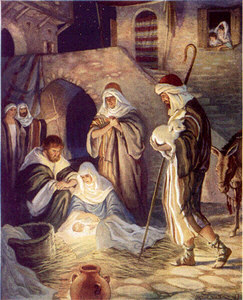




 D
D Book
Section
Book
Section